
Biography
The Will to Survive
Shlomo Biezunski was born in Łódź, Poland, on May 13, 1926. He grew up above his family's drugstore, near the cinemas and cafés of Piotrkowska Street. By the end of the war, ten days before his nineteenth birthday, his parents and sister had been murdered, and he was the only member of his immediate family still alive.
Łódź (1926–1939)
Łódź was the second-largest city in Poland and the center of its textile trade. It was called the Manchester of Poland. The mills employed thousands. Before the war, the city had close to 600,000 people, and about a third of them were Jews.
Shlomo's father, Moshe, was a pharmacist. He had studied in Cologne, Germany, between 1918 and 1920 and spoke German well. In 1920 he came home and joined the Polish Army and fought against the Bolsheviks at the Battle of Warsaw, the Miracle on the Vistula, which turned back the Soviet advance and secured Poland's survival as an independent state under Marshal Piłsudski. Shlomo's mother, Perel, ran the store alongside Moshe. His only sibling was a sister, Manya, six years older, born in October 1920. She finished high school and trained as a secretary.
They were middle class. Shlomo said that compared to their neighbors they were the poor ones. Many neighbors were rich and influential in Łódź industry. David Rabinovich, director of the Widzew textile works, lived in the same building. They lived at Narutowicza Street 40, on the fourth floor of a five-story building with an elevator, which was still uncommon in Poland. Across the street was the Hotel Polonia. Around the corner was Piotrkowska Street, with the cinemas and cafés. On the ground floor of their building was the family's drugstore. It sold cosmetics, perfume, and toiletries: Palmolive, Colgate, soaps and creams from Germany, England, and America. Moshe and Perel ran it with a hired clerk. Perel kept a maid for the apartment.
The store was open on Saturdays, because Saturday was when the prosperous farmers came in from the countryside to shop near the railroad station. Friday nights the family ate together: fish, meat, cake, coffee. They belonged to a neighborhood synagogue and kept the main holidays.
Shlomo started at a private Jewish school at six, a year before the public-school age. He was a good student in everything but Hebrew, which he could never get the hang of. He found that funny later, after he moved to Israel and spoke it every day. He read constantly. There was a lending library nearby, and he worked through Zane Grey, Karl May, Jack London, and Victor Hugo. He read the newspapers too. He was nine when Italy invaded Ethiopia and ten when the Spanish Civil War began, and he followed both.
He had little personal trouble as a Jew. His two closest friends were the sons of a neighbor who ran a grocery. In winter the three boys rode Shlomo's Canadian sled in the park across the street, pulled by the neighbors' big German shepherd, and the two friends kept the other Polish boys from bothering him. On Good Friday those same friends would tell him, "You killed our God." The first time, he went home and asked his mother which God he had killed. She told him not to blame them. It was what the priests taught them, she said.
Every summer the family rented a cottage in the woods outside the city. In the last summer before the war his parents bought him a new English bicycle. The family was still at the cottage when the war began, and had trouble getting home. Shlomo stood at the roadside with the bicycle and watched the Polish Army fall back toward Warsaw. A Polish soldier walked up and took the bicycle. It was the first thing the war took from him.
The Invasion (1939–1940)
Germany invaded Poland on September 1, 1939. Łódź was shelled but not badly damaged. Within six days the German army was in the city.
The Germans posted placards in Polish and German ordering people out to Piotrkowska Street to greet the army. People went. Shlomo went too. He was thirteen, and he said plainly that he was impressed. The Germans came fully motorized, with cars, trucks, tanks, and even their horses carried on trucks. The Polish Army had ridden horses. A large swastika flag hung down the front of City Hall. He stood and watched it.
In those first weeks, before the fighting was over, the Germans put out a call for men to march to the defense of Warsaw. About a thousand went on foot. German dive-bombers caught them on the open roads and machine-gunned them. Moshe concluded that the point had been to clog the roads ahead of the Polish Army. He turned back after the first attacks. "What's happened, happened," he said. "I'm going back to my family."
For the first months after that the regular army ran the city and did not single out the Jews, and the store did well. German soldiers wanted soap, and the family had cases of it. The officers paid cash and sat in the corner of the shop. The maid and the store clerk had left for the countryside, so the family hired a Jewish girl named Eva, who had long blond hair and looked German. Moshe and Perel spoke perfect German. Customers did not believe they were Jews.
Then the Gestapo and the SS arrived. The family had to put a sign in the window: Jewish store. The Germans began taking Jews off the street for labor. They emptied the Hotel Polonia of its guests and moved officers in. Any Jew passing the door had to take off his hat and bow. Because the apartment was large, the family was ordered to take in a German officer, an older administrative man with a servant. He warned them that drunk soldiers were looking for Jewish women, and told them not to open the door at night, to call him instead. Sometimes he brought a loaf of bread.
January 1940
In January the Gestapo went through the city taking Jewish men. They took Moshe with more than three hundred others. They brought the men to an electric trolley station, packed them into the cars, and shot them.
Then they telephoned the families and told them to come for the bodies.
Perel and Manya were afraid to go. Shlomo went. He took his Canadian sled and another boy went with him. They found his father's body, covered it, and pulled it across the city to the Jewish cemetery, so that he could be given a proper burial. He was thirteen.
In the weeks that followed, his mother sold off the store's stock for cash and closed it. She had a shoemaker sew pockets into the family's shoes and hid gold coins in them.
The Ghetto (1940–1944)
In the spring of 1940 the family was ordered into the new Jewish quarter, the Łódź Ghetto, in the poor northern part of the city. They could take some bedding and a few pots. Everything else stayed behind. The ghetto was sealed on April 30, 1940, with about 164,000 people inside. It was the second-largest ghetto in occupied Poland and, because the Germans found it useful, the last to be destroyed.
At first the three of them rented a room from another family. Later they were given a room in a small four-room house, one family to a room, with a stove in the middle, an outhouse in the yard, and one light bulb. The first winter there was nothing to burn. The yard fences and the wooden outhouse door had been pulled apart for fuel. Shlomo read next to the warm stove pipe. Ice formed on the walls by the windows from the steam of cooking.
Everyone had to work. Work was what brought food. Shlomo was put in a metal factory and trained on a lathe. He was fourteen. Manya worked as a secretary in a workshop that made German uniforms. Perel made the straw overshoes German sentries wore on the Russian front.
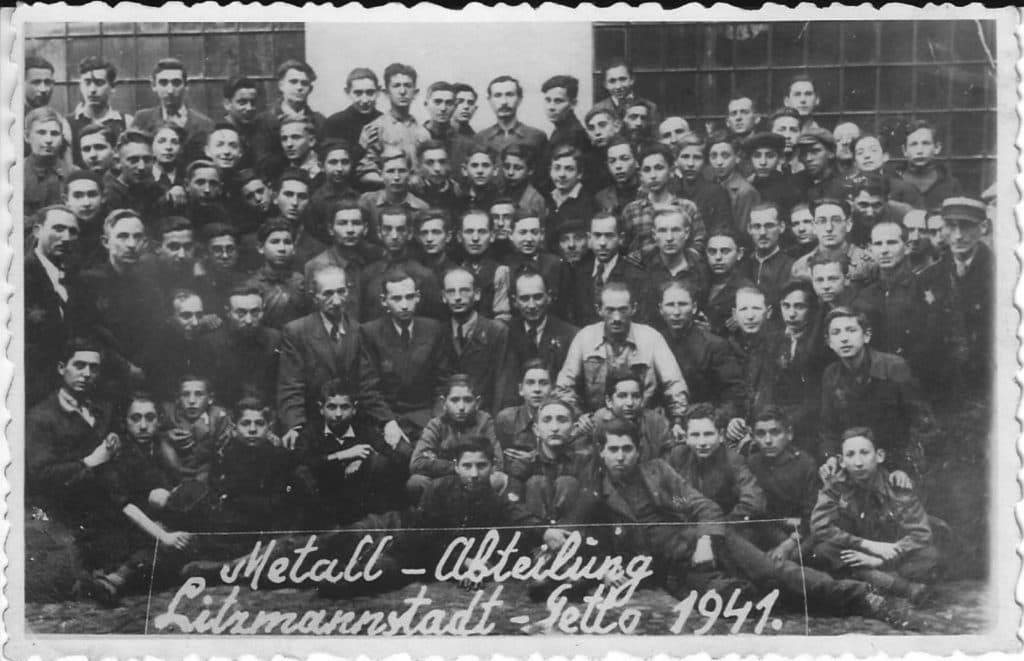
The bread ration was about 100 grams a day, with a little brown sugar and oil. The factory soup was warm water with three or four cubes of potato. People cooked thin potato peels overnight with a little flour into something like a cake. They grew radish leaves and boiled them like spinach. Children dug through the ash heaps outside the old factories for unburned coal.
The family did a little better than most at first, because of the gold. A Polish woman who had done their laundry before the war met them at the cemetery fence, where there was no guard post, and they could pass things through to the Polish side. She traded food for the coins. Some of Moshe's old customers, men who stayed prominent inside the ghetto, helped them. One, a man named Sztewi, helped Perel find work.
The big men died first. Shlomo had always been thin, a poor eater, which had worried his mother, but now it kept him alive. He remembered not being sick once in four years, while typhus and dysentery killed people in the street. The dead lay where they fell.
The hunger was not the only danger. The German criminal police kept lists of which Jews had been wealthy. Their chief, a man named Suder, had grown up among Jews and spoke Yiddish, and would walk into the ghetto and ask people in Yiddish when they thought Hitler would be dead. Anyone who answered could be arrested. They arrested Perel. While she was gone, Suder's men came to the apartment, pulled Manya out of the room, and searched everything. They found a brass scale and took it. They found Manya's gold ring, but the ruby was missing from the setting, and they accused Perel of hiding a diamond. She said it had been a cheap ruby. They found it, eventually.
Suder beat her himself. He demanded, in Yiddish, where she had hidden the harter and the vaykhe, the hard coins and the paper money. He knew all the expressions. She said she had nothing. After three weeks they released her. She came back physically unrecognizable. She had lost even more weight on top of what the ghetto had already taken. She could not go to work. She lay in bed. She never really recuperated.
In 1942 the Germans sealed off each district in turn and chose the children, the old, and the sick for deportation to the Chełmno killing center. Shlomo's aunt, alone with a small child, saw the Germans coming for her and jumped from an upper window with the child rather than be taken. Perel was caught in the round-up and marked for deportation. Sztewi had her released.
Through all of this, Shlomo kept his head down. The one time he actively defied the Germans, he nearly did not survive it. He and the other young men on his shift joined a strike. They did not understand what a strike meant under occupation. The Jewish police arrested them and brought them to the station, where Chaim Rumkowski, the head of the ghetto's Jewish administration, told them they were lucky the Gestapo had not heard of it, because if they had, the strikers would have been shot or hanged. They went back to work.
There was no way out in any case. The ghetto was ringed by a fence and barbed wire, with a German guard every few hundred meters. A trolley line for Poles ran through it. The riders drew a finger across their throats at the people behind the wire. The Germans paid a kilo of sugar and a bottle of vodka for a Jew turned in.
August 1944
By the summer of 1944 the front was close. The Red Army had pushed west to the Vistula and then stopped, and the Germans used the pause to empty the ghetto. The final liquidation of Łódź began in August 1944. Over the next weeks about 67,000 people were put on trains. When the Soviets reached the city in January 1945, they found 877 Jews alive.
The German administrator of the Łódź Ghetto, Hans Biebow, told the Jews they were being sent to work in Germany, where there was food, and that they should bring large pots. The family tried to hide in the fields, but there were guards everywhere. At the station each person was given a loaf of bread, a little sugar, and a head of cabbage. Then forty or fifty were packed into each cattle car, with one bucket and a small window. The journey took two or three days.
They arrived at night at Auschwitz-Birkenau under floodlights, with dogs, SS, and machine guns everywhere. Men were sent one way, women another. That was the last time Shlomo saw his mother and his sister. They were murdered in the gas chambers, as Shlomo later came to understand.
The SS demanded all valuables. Shlomo had nothing to give. The men were kept standing at roll call for three days with no food, and anyone who fell stayed where he fell. They slept on a stone-and-wood floor under blankets made for horses. His head was shaved and disinfectant was rubbed into the skin, and it burned all night. His mouth was checked for gold fillings. They took his clothes and left him a shirt and a belt. A number was tattooed on his arm: B-6901.
Then they brought hot soup in washbasins, one basin per four men, no spoons, four hundred people fighting to eat. Shlomo used a piece of glass to shape a scrap of wood into a crude spoon with a sharp point at one end, so he could fight for his share.
One night in the barracks, a boy his age from the ghetto factory sat down next to him. Szalek was what people called Shlomo in Polish. "Szalek," the boy said, "we're not going to survive this." Shlomo told him to stop talking that way. They were young, and there were old men in the camp who wanted to live. The war would end. The next morning the boy was dead in the same place. No one had touched him.
The Selection (Autumn 1944)
Over the weeks that followed their arrival, the selections at Birkenau came often. The whole block was stripped naked and marched past the SS. The test, as Shlomo put it, was meat on your backside. If a man still had some, he could work a little longer. If not, he was, in camp slang, a Muselmann, marked for the gas.
One day the SS came looking for skilled men, and a German civilian engineer was with them. Shlomo was not a strong man. He was, as he put it later, thin enough to go through the eye of a needle. The engineer asked him, in German, what he was.
"I am a lathe hand," Shlomo said.
The SS officer looked him over and said he was too thin to work. At Birkenau, that meant the crematorium.
The engineer overruled him. "No, we need him," he said in German.
That sentence was his ticket to life.
The engineer was staffing a machine shop at a coal mine. Shlomo and 359 others were put on trucks and driven about thirty kilometers to Fürstengrube, a sub-camp of Auschwitz at a hard-coal mine near Mysłowice. The mine belonged to a company controlled by IG Farben, and its coal was meant for the IG Farben works at Monowitz. About 1,800 prisoners were held there.
Fürstengrube (September 1944–January 1945)
The new men stood naked on the roll-call ground for hours into a cold September night before they were given striped uniforms, wooden shoes, soap, soup, and a ration of bread. Shlomo was first sent into the mine, then moved into the machine shop, as the engineer had intended.
Two men ran the camp. The SS appointed a German political prisoner named Hermann as camp elder, the senior prisoner responsible for managing the others, and the SS commandant himself was a young lieutenant named Max Schmidt. By the accounts Shlomo knew, and by several Fürstengrube survivor testimonies, Schmidt did not personally abuse or kill prisoners. He had the post through his wife's family. Her father had run the old mine before the war, and his wife and her sister lived nearby. Once, watching Shlomo work on a large steel plate with his apron over the Jewish star, Schmidt asked whether he was Russian, surprised that a Jew so young was a skilled worker.
Schmidt had not always commanded Fürstengrube. His predecessor was Otto Moll, one of the SS men who ran the gas chambers and crematoria at Auschwitz. The Christmas before Shlomo arrived, while Moll was still in command, a German Kapo escaped. Moll lined up the whole camp in the snow at midnight and machine-gunned Jews at random, though the man who had escaped was German. Schmidt was at the camp by then as a junior officer, and the prisoners said it was he who stopped Moll, telling him it was Christmas and there had been enough killing for one night. After that, Moll was promoted back to Auschwitz, because he was good at killing. He was tried and hanged in 1946.
Shlomo's first job at the camp was outside, alongside a Polish civilian miner repairing the rails. The miner liked him, told him he should marry his daughter after the war, and the miner's wife began packing Shlomo a breakfast of two slices of bread with butter.
When the engineer moved him into the machine shop, Shlomo was, by camp standards, protected. A prisoner-foreman nicknamed the Kaiser, a Kapo who had killed men with his hands, was not allowed to touch the skilled workers, because beating them would have hurt the work the engineer cared about. There were Italian prisoners of war and French civilian workers in the shop who sometimes shared fruit.
The machine-shop camp issued bread several times a day. Shlomo stood at his lathe chewing whatever he was given and hoarding bread from anyone who would share. Adam, the foreman, watched him and asked why he ate like that, chewing steadily like a cow. Shlomo told him he was still hungry. Four years without a piece of bread. He stored whatever he could get. Over the next few months the regular food brought back his strength.
He kept imagining his mother might one day see him again, alive and eating, growing stronger, doing better than the camp had given him any reason to expect. He was her only son, and he told himself she was thinking of him too. He did not yet know she was dead.
That winter, four or five prisoners, Poles and one Jew, dug an escape tunnel from a coal bin toward the rail line. Before they could finish it, a load of steel dumped from a railcar overhead collapsed it. The next Sunday the senior SS came from Auschwitz, brought the camp an unusually good soup, and then hanged all of the men who had dug the tunnel while the whole camp stood and watched.
The March (January–April 1945)
In January 1945 the Soviets reached Auschwitz, and the Germans began moving the prisoners west on foot, in what came to be called the death marches. On January 19, Max Schmidt led about 1,300 prisoners of Fürstengrube out of the camp. The sick who could not walk were left behind. A week later the SS came back and killed nearly all of them, shooting into the barracks and burning the hospital block. Shlomo marched.
They walked through snow toward Gliwice, about eighty kilometers. Anyone who fell behind or stepped out of the column was shot, and the gunfire came steadily from the rear. Shlomo had leather shoes, issued by the machine shop, and snow did not pack onto leather the way it did onto the others' wooden clogs, so he could keep walking. He and another prisoner had been ordered to carry an SS guard's belongings on a pole. Partway through the march they threw the bundle into the snow, ran forward, and disappeared into the mass of identical striped uniforms. Behind them the guard was hollering: "Where are my things?" They kept moving. In a column of thousands of men dressed alike, no one was going to find them. During a rest stop, they found one of the camp's small supply carts abandoned at the roadside. It still held dried pea-soup powder, the kind the camp kitchen dissolved in water. Shlomo saw it and thought that on a march you never knew what might turn out to be food. He tore the sleeves from his spare shirt, made them into sacks, and filled them with the powder to carry on the march.
When they reached Gliwice, at the rail yards he saw bodies stacked like cordwood, five and six feet high, laid out in neat rows and dusted with lime. He spent the night standing in a small booth because there was no room to lie down. In the morning they were loaded into open coal cars, packed like herring. Shlomo was lucky to end up with his back against the wall, while the men crushed in the center went mad. He still had a wool blanket, which he had cut into a poncho against the wind.
The train was routed south through Czechoslovakia. The journey took seven days. The guards said there was no food, and there was none, one piece of bread and then nothing. A friend had a pot. Using their belts, they scooped snow into it, and Shlomo mixed in the pea powder he had saved. It was so salty it made him desperate to drink. The men in the middle ate their belts and their shoes. One day the SS ordered them to throw out the bodies. The prisoners said there were no bodies, until they looked down and saw they had been standing on the dead. Of about 10,000 on that transport, Shlomo was told, 2,000 arrived alive.
In Czechoslovakia people stood on the overpasses and threw down bread, fruit, and smoked bacon, and children ran beside the train with water. At the station in Prague, Shlomo saw an old German guard beside carts of military bread, and asked him in German for a piece. The man gave him a whole loaf, then brought more for the others in the car.
They arrived at Mittelbau-Dora, near Nordhausen in the Harz mountains, where prisoners built the V-2 rockets in tunnels dug into the mountain. Brought into a washroom on arrival, the men stood for hours drinking water. Shlomo drank for half an hour.
At Mittelbau-Dora the SS guards were looking for anything that would keep them off the Russian front. Without prisoners to guard, a man was sent to fight. When an older Austrian guard was assembling a work detail of skilled men, Shlomo started to drift away toward a young man he recognized from the ghetto, Judenherz, his sister Manya's former boyfriend, whom he had spotted in the crowd with a broken arm. The Austrian caught him by the collar. "Du kleiner Dreher," he said, you little lathe hand, you come with us. Of the roughly 1,300 who had marched out of Fürstengrube, a few hundred were still alive. From them, three hundred were taken to work in an underground factory, where for the most part there was little actual work to do, through April. Shlomo worked next to Ukrainian civilians who were already packing to go home.
North (April–May 1945)
When April ended, Schmidt gathered what remained of his group and marched them out of the area.
They went north, through Heiligenstadt and Magdeburg, for days. On the road through Magdeburg, Shlomo watched German teenagers his own age walking freely through their city while he went down the middle of the road under guard. He was eighteen. The best years of a young man's life, he would say later, were gone. He had spent them starving and being moved from camp to camp. His parents were dead.
They reached the Elbe and were put on a barge towed by a tug, which carried them down the river and into the Kiel Canal to Lübeck on the Baltic. Schmidt's parents had a farm at Ahrensbök, in Schleswig-Holstein, and that is where he brought them. The roughly 250 surviving prisoners were kept in a large building along the road, with the fifteen remaining SS on the other side. To feed them, the guards rented the prisoners out to local farmers for labor. One farmer fed them well and sent potatoes back for the others. Shlomo visited him every Sunday for years after the war. Two Polish girls working on a farm learned he was Polish and offered to hide him in their attic. He did not dare. The older guard, for whom Shlomo translated, told him the war was ending, to make sure he survived, and not to run.
While they were near Ahrensbök the International Red Cross came, looking for Jews from Western Europe who spoke Dutch, French, or English, and took them away. The Polish Jews were passed over and handed a few cigarettes and some chocolate.
The Cap Arcona (May 1945)
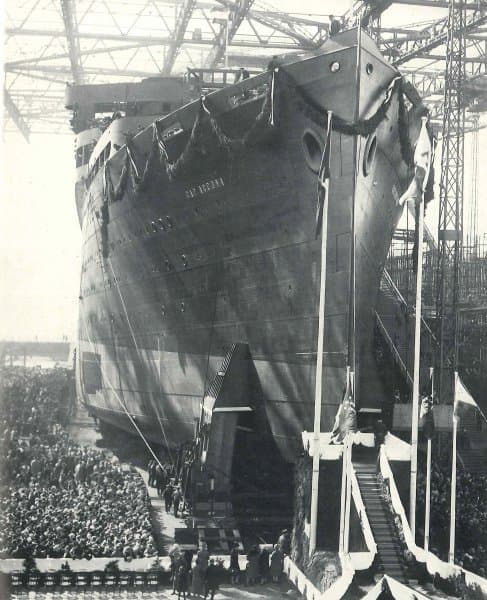
On May 2, 1945, Schmidt brought his prisoners to Neustadt, on the Bay of Lübeck, a submarine base. Out in the bay, anchored about five kilometers offshore because the harbor was too small for her, stood the Cap Arcona, before the war a 27,000-ton liner of the Hamburg–South America line. The prisoners were told they would be taken aboard and shipped to Sweden.
When the column reached the waterfront, the naval officer in charge of loading refused them. He already had 8,000 prisoners aboard, he said, and nowhere to put 300 more. The SS returned to shore. The port commandant telephoned an order, and the officer took them. Because they came last, Shlomo's group was put in the highest cabins, ten men in a one-person cabin near the top deck. That is the reason any of them lived.
The RAF pilots attacking that day did not know the ships held prisoners. The Cap Arcona was not alone in the bay. German authorities had also loaded prisoners from the Neuengamme camps onto a freighter called the Thielbek and a second liner, the Deutschland, anchored nearby. The British had broken German codes and believed SS men were gathering ships in the bay to flee to Norway. The Swedish and Swiss Red Cross had warned British intelligence on May 2 that the ships were full of prisoners, but the warning did not reach the pilots. The prisoners were below deck, and the ships carried no Red Cross markings.
On the morning of May 3, 1945, Hawker Typhoon fighter-bombers of the RAF came in over the bay in waves, firing rockets and cannon and dropping bombs. The Cap Arcona was hit and began to burn from the top down. Roughly 4,500 prisoners were aboard, most of them Poles and Russians from the Neuengamme camps, and a few hundred Jews from Fürstengrube, who were the only Jews on the ship.
Shlomo's group was locked ten to a cabin near the top. They could see nothing. The door opened outward into a corridor jammed with men, and they could not open it. They heard the screaming through the door. They felt the ship begin to list. The water was about seven degrees Celsius.
Meanwhile, on the open decks, the SS had access to the ship's lifejacket stores. The prisoners did not. The SS went over the side. German trawlers later pulled about 400 of them out alive.
The ship rolled and went down, but the bay was shallow and part of the hull stayed above the surface. The men in the cabin opened the porthole. One after another tried to force himself through the round opening and could not. Shlomo took off his clothes and went through it. He climbed out onto a cluster of wooden buoys nearby, heavy timbers bound together, and sat there, naked. After the screaming, it was quiet.
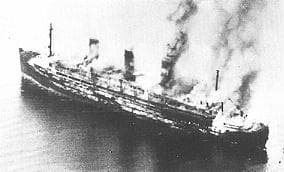
Near dark the British understood that the ships had been full of prisoners and sent fishing boats out to search the water. From the buoys they took thirty-seven people. Shlomo was one of them. They gave him a blanket. A British tank officer gave him a tin of biscuits. A naval officer came down and asked him, in English, how he felt. Shlomo took the man's hand and kissed it. "Sir," he said, "we waited five years for you."
He had pneumonia and was taken to a hospital, where the German staff treated him as an ordinary patient. British forces had reached Neustadt that afternoon. Of the roughly 7,000 people killed in the bay that day, on the Cap Arcona and on the freighter Thielbek sunk beside her, most died hours before the British arrived. Adam, the foreman from Fürstengrube, died on the ship with his two brothers. They were trying to get out. For the next two springs, the bodies came up in the bay, and German prisoners of war were sent to collect them.
He was free, ten days before his nineteenth birthday.
After (1945–2020)
After the war, he had no home to return to in Poland. Shlomo stayed in the displaced-persons camp at Neustadt about two and a half years, working as an interpreter for the British Jewish Relief Unit. He could have gone to Britain, taken in by a Jewish family there.
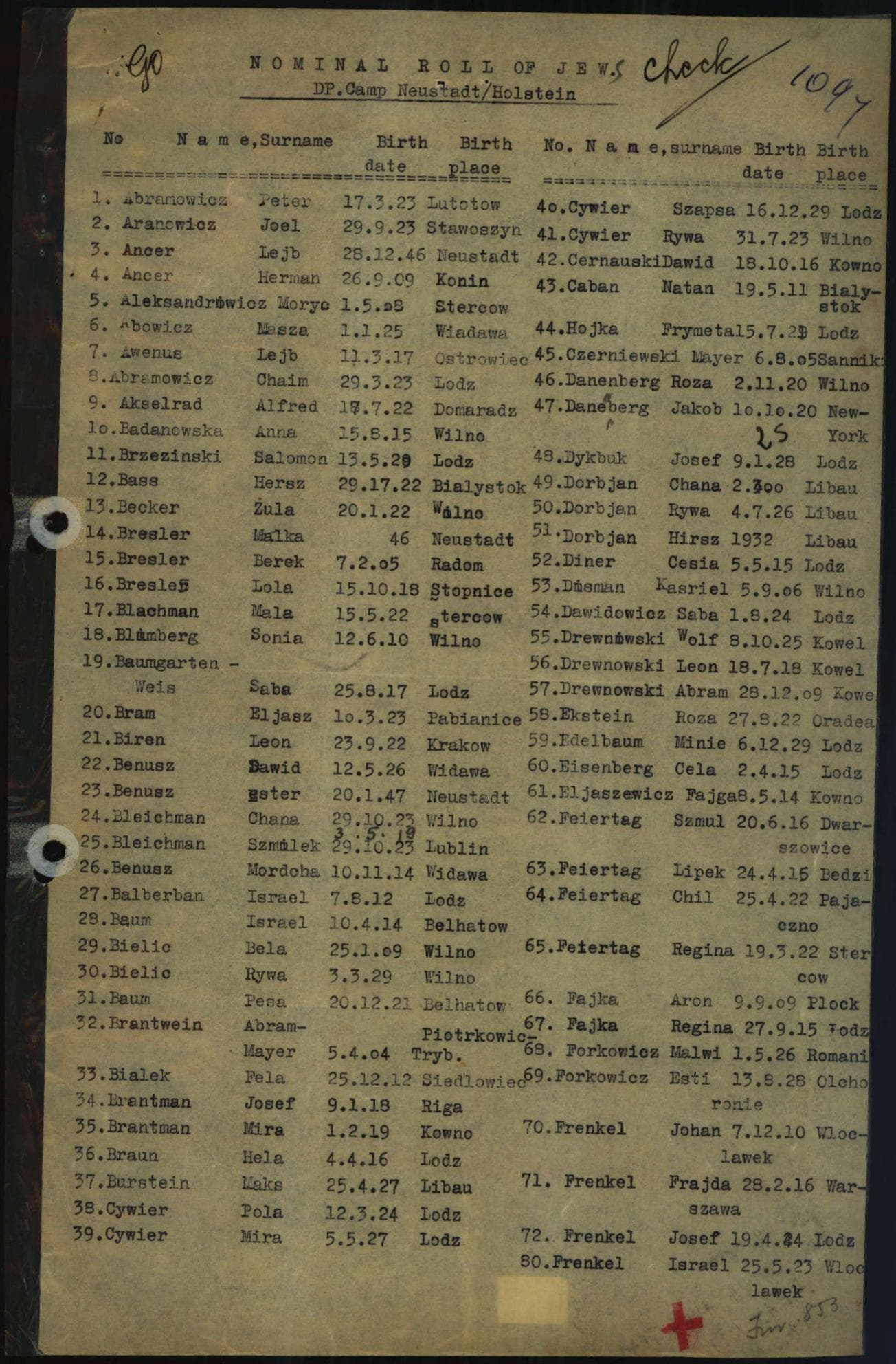
His name appears in the camp's records, preserved today in the Arolsen Archives. A nominal roll of Jewish residents dated May 15, 1947 lists him as entry number eleven. The surname is misspelled. The birth year is correct, but a correction in the ledger makes it hard to read. The document survived.
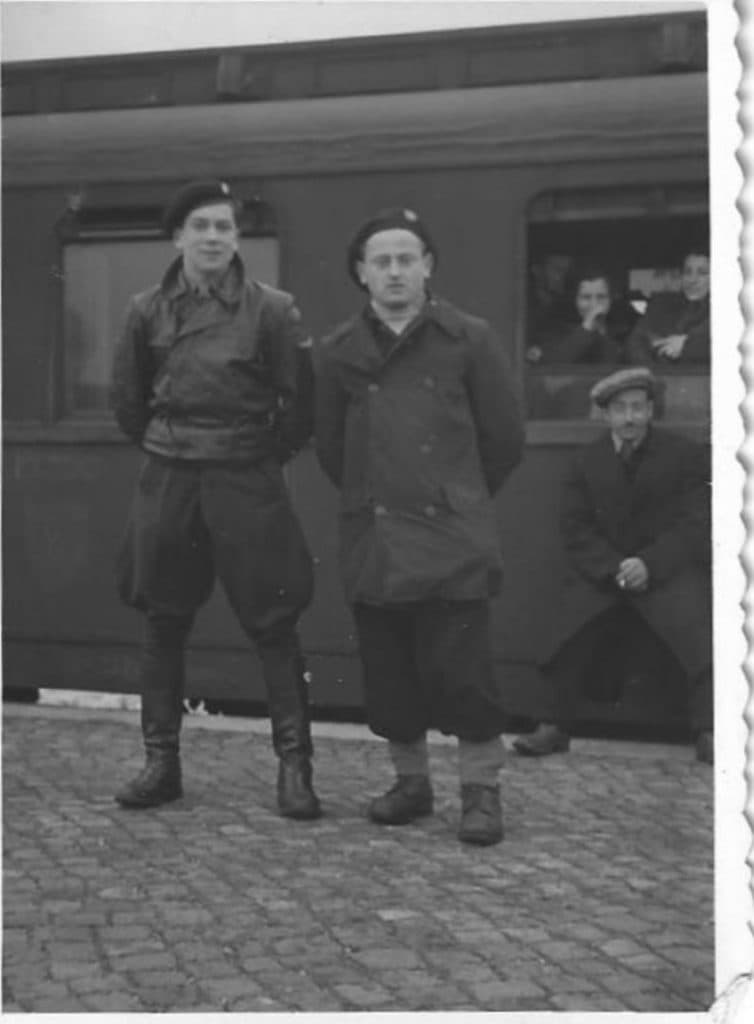
He decided to go to Palestine. He moved to the Bergen-Belsen DP camp, joined the Haganah, and went to work for the Bricha, helping survivors across the Alps into Italy and onto ships for Palestine. He had been Szalek in Polish, Salik in Yiddish. Now he became Shlomo. In April 1948 he sailed from Marseille, through the Strait of Gibraltar, and landed at Haifa, shortly before Israel declared independence.
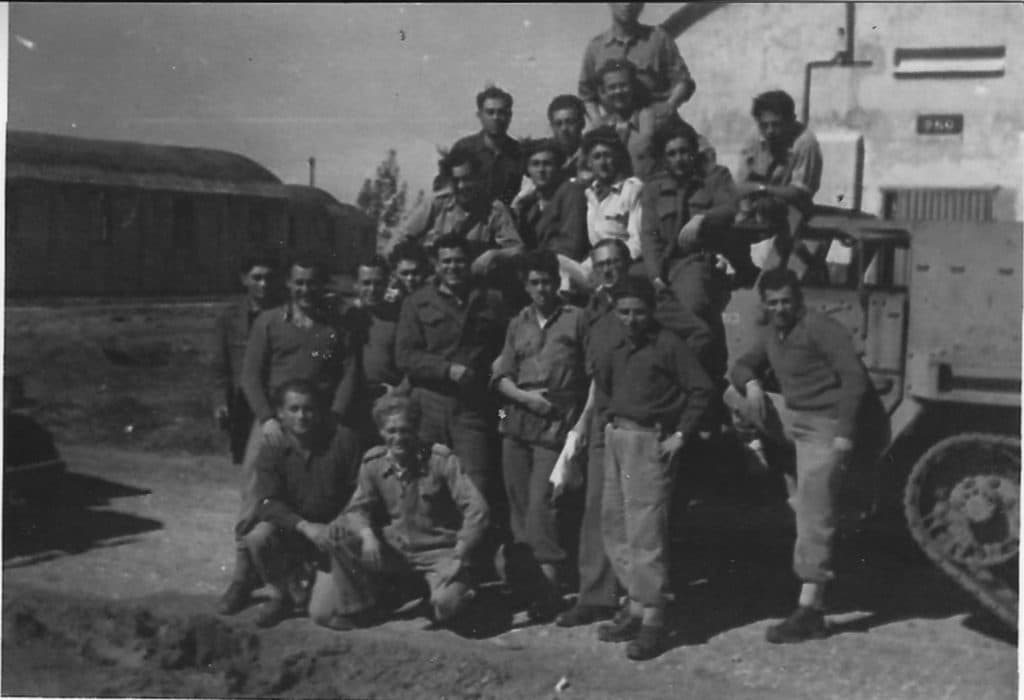
He was drafted at once into the Negev Brigade and fought in the 1948 war, in the campaign that took the Negev down to Eilat. He was on active duty from 1948 to 1950 and in the reserves for nineteen years.
Through those years, the losses did not leave him. He had lost his whole family. A bullet has no address, he said. At least he had a few cousins in Israel who would remember him, which was more than many of the new immigrants had.
He found work with the Israel Electric Corporation, where he met Bella, an army corporal at headquarters in Ramat Gan. They married in 1955 and had two sons, Ram and Oded. When the Sinai campaign came in 1956, his elder son was a month old, and he took his kit bag the next day and went. He later opened his own tool-and-die shop, and served again in the reserves in 1967.
After 1967 the Israeli economy was poor. In the United States, the war in Vietnam had created a demand for skilled machinists that American factories could not fill. Shlomo wrote to the U.S. Department of Labor and got a work visa quickly. He came by ship to New York and then to Paterson, New Jersey, where textile men from Łódź had built the silk industry. He worked at Universal Manufacturing, took the overtime, and saved enough to buy a house in Fair Lawn that was ready when Bella and the boys arrived in 1969. After eight years he took a job at Sandvik, the steel company, and worked there until he retired.
Five of his cousins and an uncle had survived the war. The rest of his family had been murdered. He and Bella had five grandchildren. Bella died in December 2012. Shlomo died on August 20, 2020, in Fair Lawn, at 94. He is survived by his sons Ram (with his wife Gabi and their children Yonatan and Nitzan) and Michael, formerly Oded (with his wife Maria and their children Daniel, Aaron, and Elana).
He did not talk much about the war, even to his sons. He said he did not want to teach them to hate. He told them one thing. "You were born a Jew, you will live a Jew, you will die a Jew. Don't even try to forget it, because others won't let you forget it. Stand up for who you are."
At the end of his testimony, he was asked how he had survived. He said he did not know. "Only a will," he said. "You had to have the will to survive."
Sources
The personal events described here come from Shlomo's testimony and memoir. Historical sources were used to verify dates, places, institutions, and broader context. Where the testimony recording was unclear, details were checked against his written memoir and the documented history.
Primary sources
- Shlomo Biezunski, video testimony, recorded for the Kean College Oral Testimonies Project of the Holocaust Resource Center, affiliated with the Fortunoff Video Archive for Holocaust Testimonies at Yale University. Interviewers Jeanie Miller and Bernard Weinstein. The source for nearly all personal detail and all direct quotations.
- Shlomo Biezunski, written memoir, May 2016.
- Obituary of Shlomo S. Biezunski (Fair Lawn, New Jersey, died August 20, 2020).
Historical references
- United States Holocaust Memorial Museum, Holocaust Encyclopedia: the Łódź ghetto, Chełmno, Auschwitz, Neuengamme, Bergen-Belsen, the death marches, and the Brihah.
- Yad Vashem, "The Final Days of the Lodz Ghetto" and "The Last Deportees: From Lodz to Auschwitz".
- Auschwitz-Birkenau State Museum, Fürstengrube sub-camp, Auschwitz III-Monowitz, and "The 70th Anniversary of Deportations of Jews from the Lodz Ghetto to Auschwitz".
- Sub-Camps of Auschwitz, "Arbeitslager Fürstengrube", documenting commandants Otto Moll and Max Schmidt, the January 19, 1945 evacuation, the death march to Gliwice and on to Mittelbau-Dora, the route to Ahrensbök, the transfer of prisoners to the Cap Arcona, and the January 27 massacre of those left behind.
- Mittelbau-Dora Concentration Camp Memorial.
- Neuengamme Concentration Camp Memorial, "Bay of Lübeck / Neustadt in Holstein: the sinking of the prisoner ships", on the May 3, 1945 RAF attack, the Red Cross warning that did not reach the pilots, and the death toll.
- Arolsen Archives, "#everynamecounts: survivors of the Cap Arcona", which notes that a few hundred of the prisoners came from Auschwitz-Fürstengrube, and document 82019536, the nominal roll of Jewish residents of the Neustadt DP camp, May 15, 1947, in which Shlomo appears as entry no. 11 under the misspelled name "Brzezinski Salomon."
- Jewish Virtual Library: Mordechai Chaim Rumkowski, the Bricha, and the Negev Brigade.
- Encyclopaedia Britannica: the Battle of Warsaw (1920), IG Farben, the V-2 missile, the Haganah, the Arab-Israeli wars, the Suez Crisis, and the Six-Day War.
Image credits
- Łódź Ghetto metal workshop (1941): Biezunski family collection, courtesy biezunski.com. Shlomo is at the bottom center of the photograph.
- Cap Arcona at launch (1927): source unknown, Wikimedia Commons, public domain.
- Cap Arcona burning (May 3, 1945): Royal Air Force, Wikimedia Commons, public domain.
- Arolsen Archives DP list (May 15, 1947): Arolsen Archives, document 82019536, used with attribution.
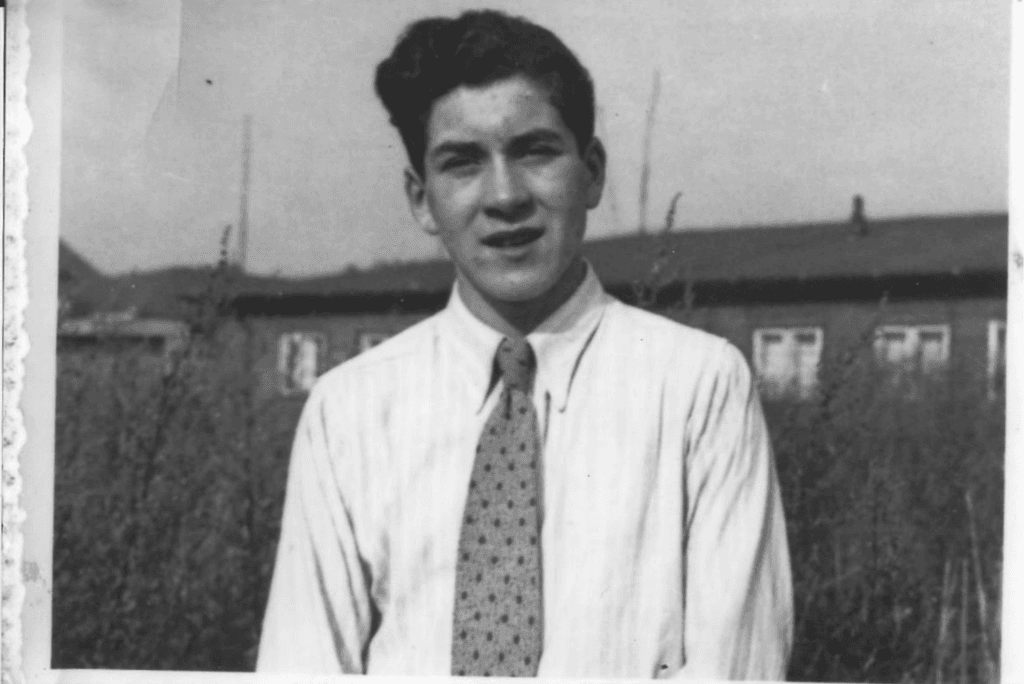
- All other personal photographs of Shlomo Biezunski: Biezunski family collection, courtesy biezunski.com.